2026-10-16 ·
Local Considerations for Replacing Electrical Systems After Fire Damage
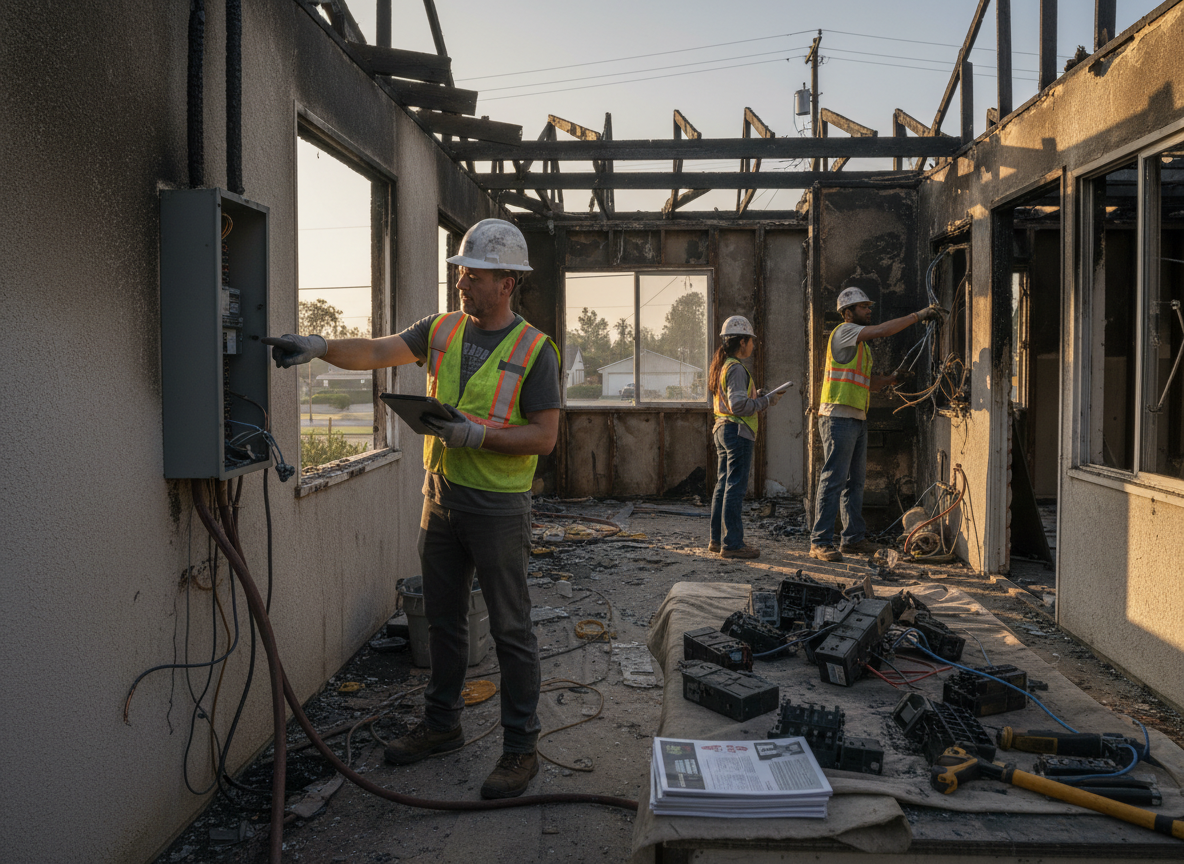
In Guasti, replacing electrical systems after fire damage starts with evaluating the impact on wiring runs common in homes built before 1980 that dominate neighborhoods around Turner Avenue and the former airport area. These systems frequently suffer hidden charring along circuits that standard visual checks miss, requiring removal of drywall sections to trace damage through attics and walls. San Bernardino County building codes then dictate upgrades to current AFCI and GFCI standards during any repair work.
Evaluating Damage in Guasti's Older Housing Stock
Guasti's residential mix includes many mid-century homes with knob-and-tube or early aluminum wiring that fire can compromise without obvious surface burns. After a fire, technicians must test continuity on every branch circuit because heat travels along conductors and melts insulation inside walls. Properties near the 10 freeway corridor also face added soot infiltration into junction boxes that accelerates corrosion on connections. This inspection phase typically reveals whether partial rewiring suffices or full panel replacement is needed to meet county requirements. Coordination with local inspectors happens early because Guasti falls under San Bernardino County permitting rules that differ from neighboring cities like Ontario.
County Code and Permit Realities
San Bernardino County requires permits for any electrical work exceeding minor repairs, and fire-damaged systems almost always trigger full review. Replacement panels must meet current amperage loads for modern appliances while incorporating arc-fault protection absent in older Guasti installations. Crews pulling new Romex through existing conduit runs often discover that 1960s-era boxes lack the space or grounding needed for today's standards. Homeowners in areas like Bloomington or Rialto borders face similar hurdles when contractors cross county lines. Documentation of every replaced circuit helps satisfy both insurance adjusters and final inspections.
Coordination with Related Restoration Work
Electrical replacement rarely happens in isolation because fire often affects structural elements and leaves behind water from suppression efforts. Teams address structural repair after fire first to create safe access for new wiring runs. Electrical fire cleanup crews remove charred debris from panels before electricians begin, preventing contamination of new components. In Guasti's dry climate, lingering moisture from firefighting can still corrode fresh connections if drying is incomplete, which is why the process links directly to addressing water used in firefighting in Guasti's dry climate. Proper sequencing avoids rework and keeps projects on schedule.
Practical Steps for Homeowners
Homeowners should request a written scope that lists every circuit to be replaced and the panel location chosen for the new service entrance. Schedule the work during daylight hours when possible because Guasti evenings bring cooler temperatures that affect material handling in unconditioned attics. Keep copies of all permits on site because county inspectors may visit unannounced once drywall is open. After completion, request a final electrical walkthrough that includes testing every outlet and switch with a load meter rather than a simple plug-in tester. This step confirms the system meets code before walls are closed.
Insurance Documentation and Next Steps
Accurate records of the original electrical layout help support claims for full system replacement rather than partial fixes. Residents can reference how to document smoke damage for insurance claims in San Bernardino County to organize photos and contractor notes before work begins. Once new wiring passes inspection, the focus shifts to restoring connected systems such as HVAC and appliances that share the same circuits. Properties in nearby Rancho Cucamonga often follow the same county process, allowing crews based at 323 N Turner Ave to apply consistent methods across the region. Twenty-four-hour availability ensures emergency power isolation happens immediately after any new incident.