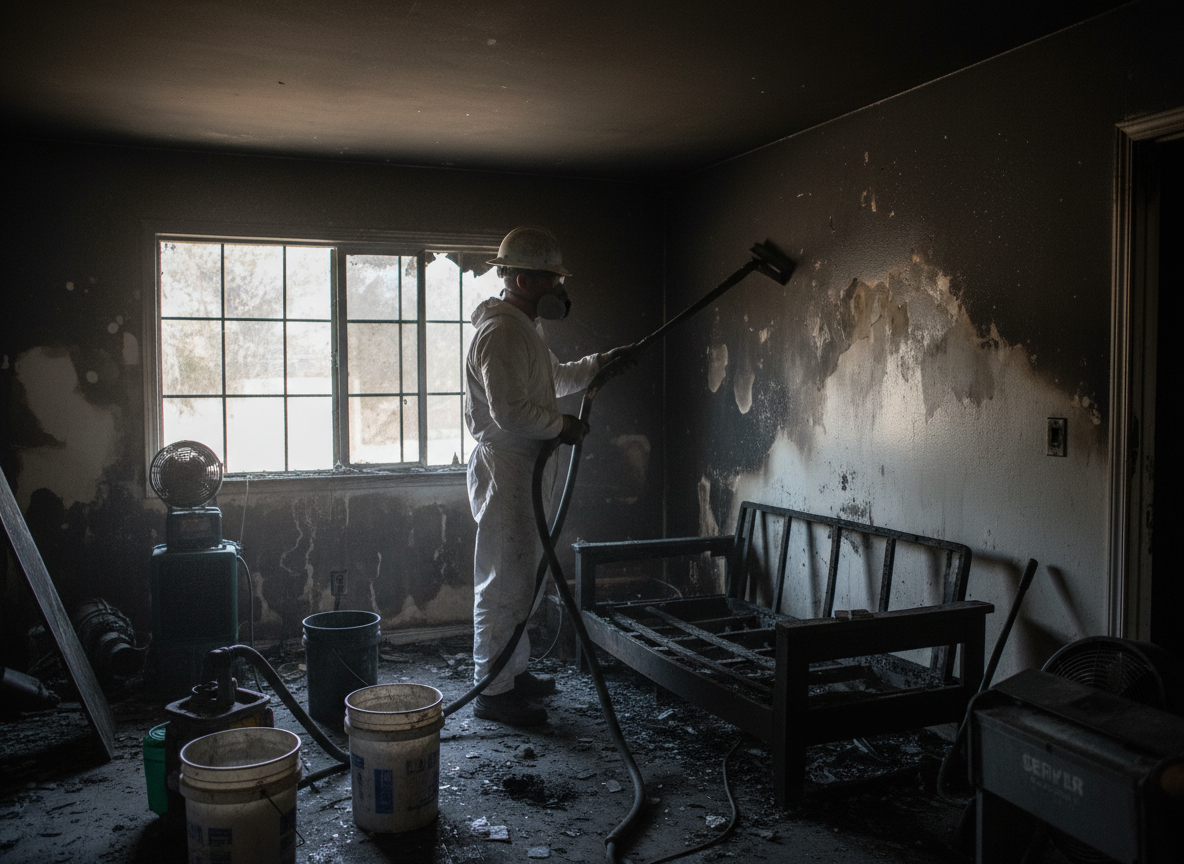
Smoke from structure fires in Guasti often penetrates older stucco and wood-frame homes common in San Bernardino County neighborhoods near the 10 freeway. Porous drywall, insulation, and cabinetry trap soot particles that release odors when humidity rises, even months later. Restoration requires sealing affected surfaces before repainting and using air scrubbers to pull particulates from HVAC systems that run constantly in the area's hot summers.
Dry Santa Ana wind conditions typical around Guasti carry smoke farther into adjacent rooms and attics than coastal fires, leaving residue on concrete slab foundations that hold heat. Technicians must test for hidden pH changes in drywall that cause new paint to fail and use specialized cleaners on tile and grout in bathrooms where smoke condenses overnight. Skipping these steps leads to recurring smells when residents restart their evaporative coolers in spring.
Local building stock from the 1950s through 1970s features single-pane windows and minimal attic ventilation, trapping smoke longer than in newer Ontario subdivisions. Proper restoration includes removing and replacing insulation in crawl spaces where rodents have disturbed soot layers, then running negative air machines for several days to meet clearance testing before occupancy.
Technician insight
In Guasti the thing that catches most people out with smoke damage restoration is how the dry inland climate lets fine soot stay suspended in single-wall construction homes built before 1970. Homeowners try wiping surfaces themselves and just push the particles deeper into the drywall paper facing, so the odor returns the first time the heater kicks on in winter.
Smoke in 1960s Guasti Bungalow
A kitchen fire sent smoke through the attic of a 1962 wood-frame home near Turner Avenue. We found heavy soot on rafters and inside wall cavities where insulation had settled. After full containment, we cleaned ducts, replaced contaminated batts, and treated all surfaces. The family moved back in after three days with no lingering smell.
How it works
- 1
Initial Assessment
Inspect all rooms, attics, and HVAC ducts in the Guasti property to map smoke migration paths.
- 2
Containment and Air Filtration
Set up barriers and run HEPA scrubbers to prevent soot spread during cleaning.
- 3
Surface Cleaning and Odor Removal
Apply pH-neutral cleaners to walls, ceilings, and hard surfaces followed by thermal fogging or ozone treatment.
- 4
Final Clearance
Test air quality and surfaces before allowing reentry and coordinate with any needed drywall repairs.
Pricing
Costs depend on square footage affected, depth of soot penetration into insulation, and whether HVAC cleaning is required.