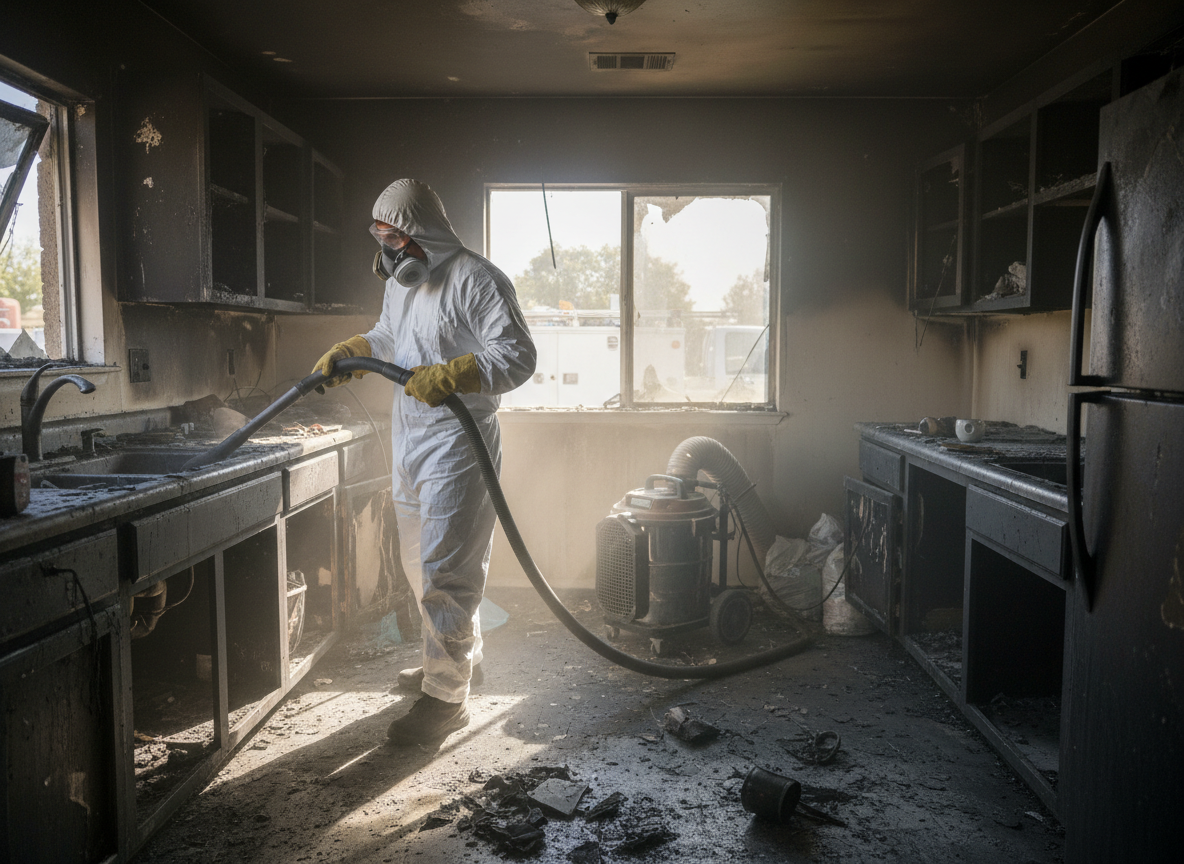
Fire damage clean up in Guasti requires immediate attention to soot and smoke residues that settle into drywall, insulation, and HVAC systems common in the area's mix of mid-century homes and industrial-adjacent properties. Crews start by establishing negative air pressure to prevent cross-contamination between rooms, then use specialized HEPA vacuums and alkaline sponges on hard surfaces while treating porous materials that cannot be salvaged. The dry Inland Empire air often allows fine smoke particles to travel farther than expected, reaching attics and wall cavities that homeowners overlook during initial walkthroughs.
Edge cases appear frequently near the railroad corridors where older wiring and knob-and-tube remnants can reignite or complicate electrical safety checks after a fire. Technicians test pH levels on surfaces because acidic soot from synthetic materials can etch finishes if left untreated. Odor removal follows with hydroxyl generators rather than ozone in occupied structures to avoid damaging rubber seals in appliances or HVAC components still in use.
Local building codes in San Bernardino County require documentation of all removed materials before reconstruction begins, especially when fire has affected shared walls in duplexes or small commercial buildings along Turner Avenue. Homeowners should avoid running fans or the furnace until ducts are cleaned, as this spreads particulates deeper into the system and raises the scope of work.
Technician insight
In Guasti, the thing that catches most people out with fire damage clean up is how the constant dry wind funnels smoke under eaves and into the crawlspaces of older homes near the tracks, so what looks like a kitchen-only incident often requires full attic and subfloor treatment.
Smoke Migration in Guasti Duplex
A kitchen fire in one unit sent heavy smoke through shared attic space into the neighboring unit. Inspection revealed soot inside both HVAC systems and wall cavities. Crews isolated each unit, cleaned ducts, and treated insulation before clearance testing allowed residents to return.
How it works
- 1
Site Assessment
Technicians document visible soot, smoke migration paths, and affected materials while wearing PPE and using moisture meters to locate hidden water from suppression efforts.
- 2
Containment and Safety
Plastic barriers and negative air machines isolate the work zone; electrical and gas lines are verified safe before deeper cleaning begins.
- 3
Soot and Residue Removal
HEPA vacuuming and chemical sponges lift residues from hard surfaces; contents are inventoried and cleaned or packed out for off-site treatment.
- 4
Odor Neutralization and Final Clearance
Air scrubbers and hydroxyl units run until readings meet clearance standards; a final walkthrough confirms surfaces pass white-glove and odor tests.
Pricing
Pricing depends on square footage affected, soot type, and whether contents require off-site cleaning; upfront written quotes provided after inspection.