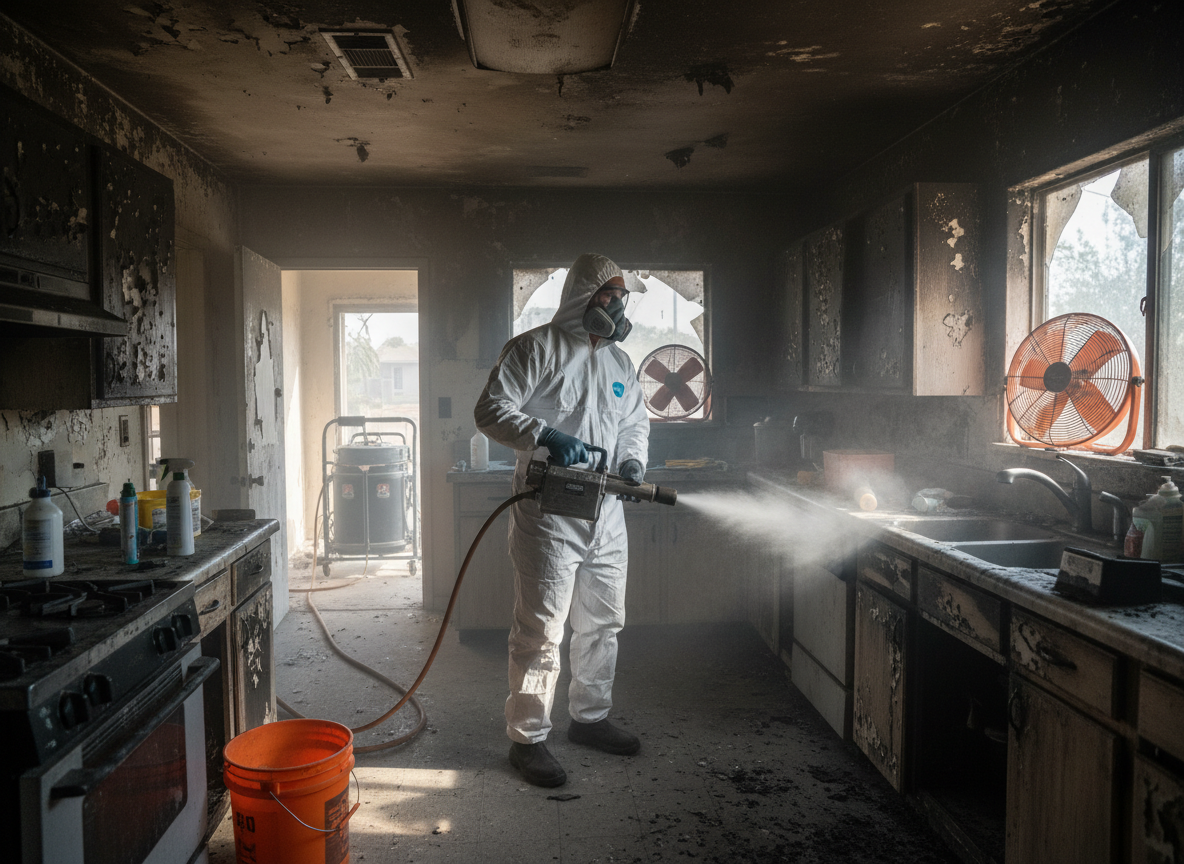
Smoke from structure fires in Guasti settles into the porous plaster and lathe walls common in homes built before the 1970s expansion along Turner Avenue. These older materials hold odor molecules long after visible soot is removed, especially when dry Santa Ana conditions pull particulates deeper into attics and wall cavities. Standard cleaning fails here because the region’s low humidity prevents natural off-gassing, leaving residual smells that surface weeks later during temperature swings between day and night.
Effective removal requires matching the method to the fire type and building materials. Protein fires from kitchens demand different neutralizers than synthetic smoke from electrical wiring common in mid-century Guasti commercial buildings. Technicians test air currents through HVAC systems that run continuously in the inland heat, then apply thermal fogging or hydroxyl generators sized for the square footage while sealing off the 91743 zip code’s typical crawlspaces to prevent cross-contamination into adjacent units.
Homeowners often overlook how Guasti’s proximity to the 10 freeway introduces additional diesel particulates that bond with fire residue, complicating single-treatment approaches. Multiple staged applications with pH-balanced agents followed by HEPA air scrubbing are usually required before clearance testing confirms levels below detectable thresholds. Skipping this step risks odors returning once seasonal winds shift and pressure changes pull trapped molecules back into living spaces.
Technician insight
In Guasti, the thing that catches most people out with odor removal after fire is how the dry inland climate and older plaster homes let smoke travel through shared attic spaces between neighboring properties on streets like Turner Ave, so treating only the fire room never works.
Attic Odor Return in Guasti Duplex
A kitchen fire in a 1960s duplex near 323 N Turner Ave left strong smoke smells that returned after initial cleaning. Inspection showed residue had migrated through the shared attic into the adjoining unit. We sealed the cavity, applied targeted fogging, and ran extended air scrubbing until testing cleared both sides.
How it works
- 1
Initial Assessment
Inspect all affected rooms, attics, and HVAC runs to map smoke migration paths specific to Guasti construction styles.
- 2
Source Removal
Extract charred materials and vacuum loose soot using equipment calibrated for older plaster surfaces found along Turner Avenue.
- 3
Odor Neutralization
Apply thermal fog or hydroxyl treatment to penetrate wall cavities and neutralize embedded smoke compounds.
- 4
Air Purification and Verification
Run HEPA scrubbing followed by independent air sampling to confirm odor elimination before reoccupancy.
Pricing
Cost depends on square footage treated, depth of smoke penetration into older Guasti wall systems, and number of neutralization cycles required.