2026-10-16 ·
Preparing Guasti Homes for Santa Ana Wind Fire Season
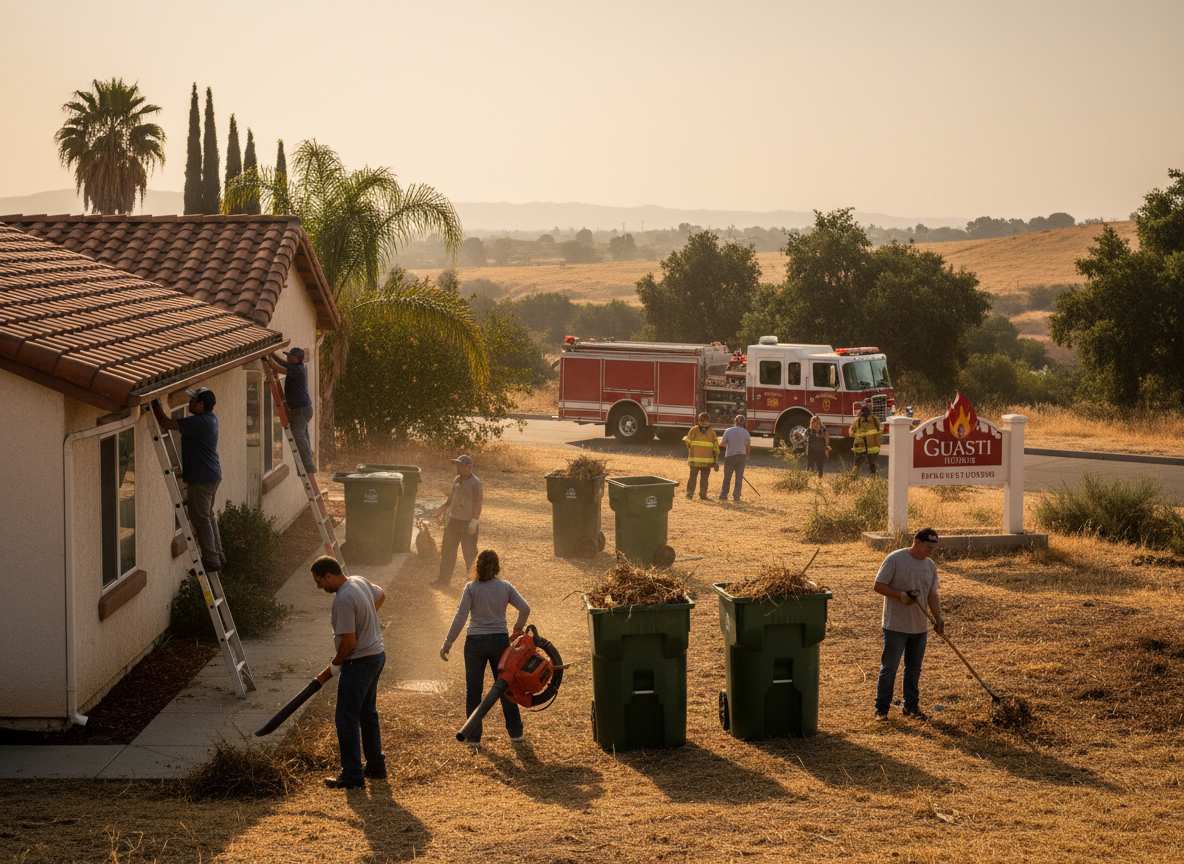
Santa Ana winds hit Guasti hardest from October through January, pushing dry air at 30–60 mph through neighborhoods near the 10 Freeway and Turner Avenue. Homeowners can lower ignition risk by sealing gaps, clearing vegetation within 5 feet of structures, and inspecting roofs for loose shingles before winds arrive.
Understanding Santa Ana Wind Patterns Near Guasti
Santa Ana winds form when high pressure over the Great Basin sends air downslope through the Cajon Pass and into the Guasti area of San Bernardino County. These winds arrive with humidity often below 10 percent and can last three to five days at a stretch. Older homes built before 1980 along North Turner Avenue and nearby streets commonly feature wood siding and single-pane windows that catch embers easily. Residents in Guasti and adjacent Ontario see the highest exposure on east-facing slopes where wind accelerates. Checking weather alerts from the National Weather Service San Diego office helps time preparations before the first strong event of the season.
Sealing Exterior Openings Against Embers
Embers travel hundreds of feet during Santa Ana events and enter homes through vents, gaps under doors, and cracked stucco. Walk the perimeter of Guasti single-family homes and install 1/8-inch metal mesh on all attic and crawl-space vents. Replace weather stripping on garage doors and add metal flashing where siding meets the foundation. Homes near the railroad tracks in Guasti often sit on lots with mature landscaping that needs trimming back 30 feet from structures. These steps address the most common entry points observed after wind-driven fires in the surrounding Rancho Cucamonga foothills.
Protecting Attics and Roof Vents
Attics in Guasti homes built in the 1960s and 1970s frequently lack modern ember-resistant vents. Replace plastic or fiberglass screens with corrosion-resistant metal mesh rated for 1/8-inch openings. Clear debris from rain gutters and install gutter covers rated for high-wind areas. When winds exceed 40 mph, loose leaves and twigs become additional fuel. Emergency fire damage restoration crews often find that ember intrusion through attic vents starts interior damage that requires full smoke remediation afterward.
Electrical System Checks Before Wind Season
Dry Santa Ana conditions increase static and stress on aging wiring common in Guasti homes. Have a licensed electrician inspect exterior outlets, service panels, and any aluminum wiring runs before October. Loose connections at weather-heads can arc when wind-driven dust creates additional resistance. Local considerations for replacing electrical systems after fire damage outlines how wind season failures often lead to hidden damage inside walls. Keep a battery-powered carbon monoxide detector on each level in case power is lost during an event.
Planning for Water Use After a Wind-Driven Fire
Firefighting in Guasti’s dry climate often requires large volumes of water that can saturate structures and lead to secondary mold issues. Store tarps and plastic sheeting in advance so damaged roofs can be covered within hours. Addressing water used in firefighting in Guasti's dry climate explains how rapid drying prevents long-term problems in stucco and wood-frame homes typical of the area. Coordinate with neighbors on shared driveways to ensure fire access remains clear during high-wind red-flag warnings.