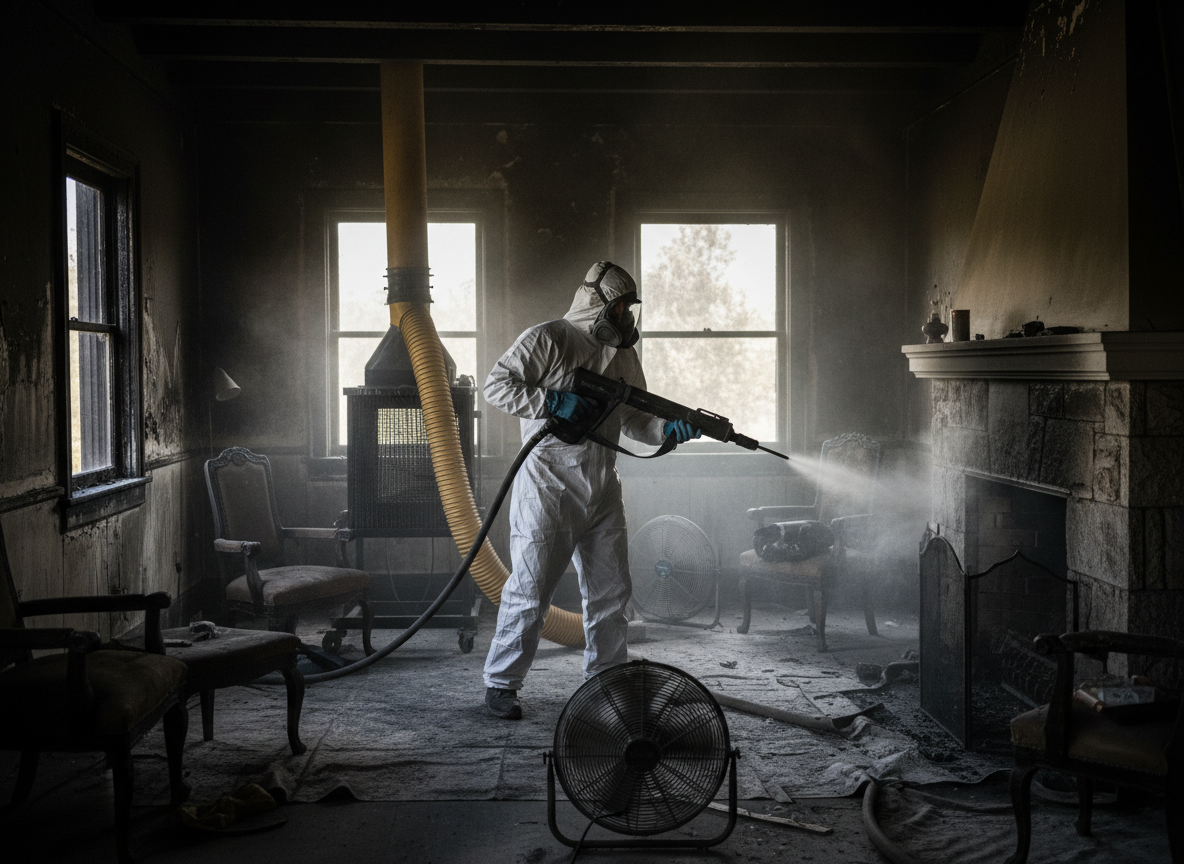
Smoke remediation in Guasti starts with mapping how smoke moved through the structure. Older homes here often have plaster walls and unsealed attics that let fine soot travel into cavities and settle on insulation. Dry regional air keeps particles airborne longer, so technicians use negative air machines and thermal fogging to reach those pockets before odors reappear weeks later.
Porous materials like carpet padding, drywall paper, and wooden cabinets hold acidic residues that can etch surfaces if left untreated. In Guasti, crews test pH levels on affected surfaces and apply specialized sealers only after HEPA vacuuming and detergent washing. Skipping this step on textured ceilings or under cabinets leaves a lingering smell that standard cleaning misses.
Ventilation systems in local single-story homes pull smoke into ducts and blower compartments. Remediation includes removing and cleaning registers, then fogging the entire HVAC run with odor-neutralizing agents. Homeowners who restart the system too soon spread particles back into living spaces, requiring a second round of work.
Final clearance uses both visual inspection and odor checks in every room. In Guasti’s dry climate, walls can feel clean yet still off-gas when temperatures rise, so crews return after 48 hours to confirm the job holds before any reconstruction begins.
Technician insight
In Guasti, the thing that catches most people out with Smoke remediation is how the dry air and older stucco homes let smoke slip into attics and under insulation without visible signs on the ceilings below.
Smoke in a Guasti Bungalow
A kitchen fire sent smoke through the HVAC and into the attic of a 1960s home. We found soot lodged in insulation batts and on duct interiors. After full vacuuming, washing, and fogging the system, we sealed the ducts and confirmed no odor returned after two days of normal operation.
How it works
- 1
Site Assessment
Technicians inspect every room, attic, and HVAC run to trace smoke paths through the specific construction details common in Guasti homes.
- 2
Containment and Removal
Negative air setups and HEPA filtration isolate affected zones while soot is vacuumed and washed from hard and porous surfaces.
- 3
Odor Neutralization
Thermal fogging and hydroxyl generators treat cavities and fabrics that standard cleaning cannot reach.
- 4
Clearance Testing
Visual and olfactory checks plus a 48-hour follow-up confirm residues are gone before any rebuilding starts.
Pricing
Upfront quotes after inspection; final cost depends on smoke travel into attics, HVAC, and porous materials.