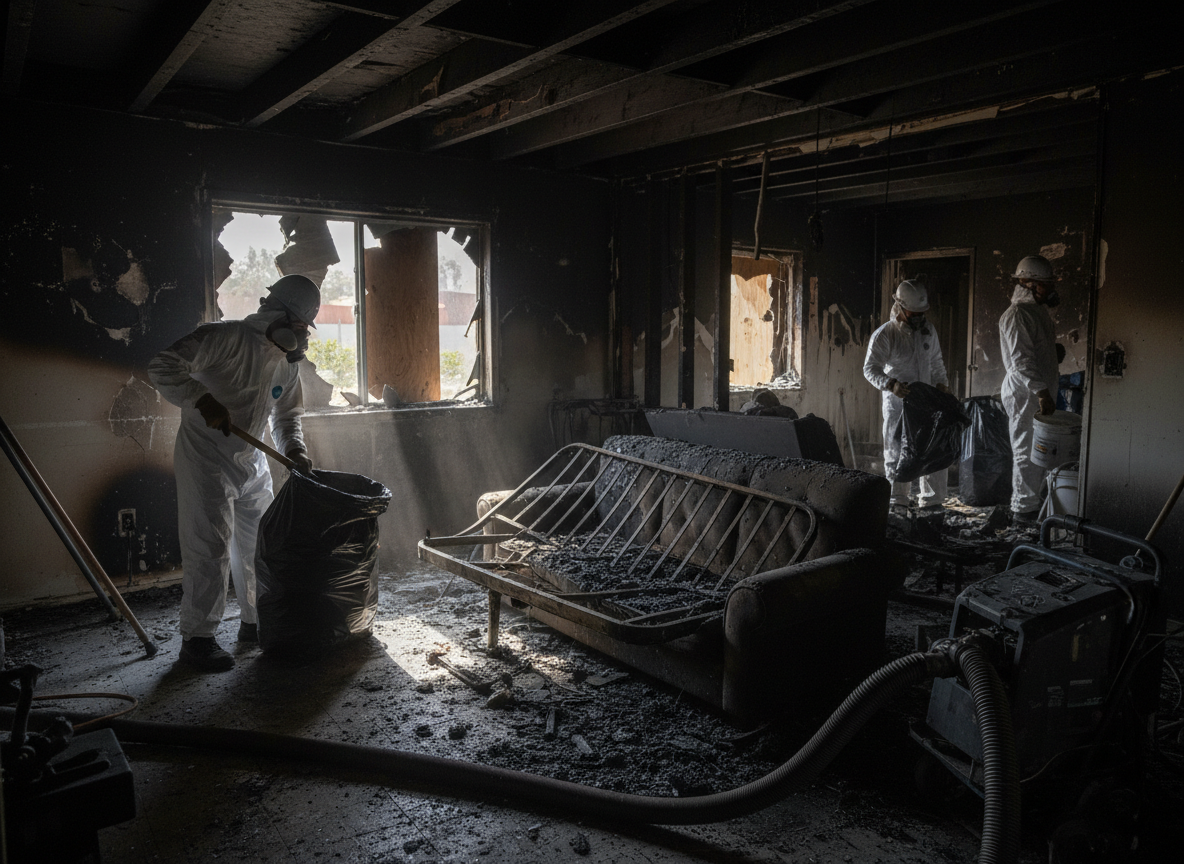
Tenant fire damage cleanup in Guasti requires careful separation of landlord and renter responsibilities, especially in older single-family homes common along Turner Avenue and nearby industrial edges. Soot from synthetic materials in kitchen fires penetrates drywall seams and HVAC returns quickly, and failure to isolate those systems spreads odors into unaffected units. Crews use negative air machines with HEPA filtration and pH-neutral cleaners on surfaces that can handle them, while documenting every step for insurance adjusters who often split coverage between building and contents.
Guasti’s dry climate and occasional Santa Ana winds accelerate smoke migration through attic spaces and shared walls in duplexes and triplexes. Technicians test porous materials like carpet padding and baseboards with moisture meters because water used during suppression can linger under flooring, creating secondary mold risks weeks later. When a fire starts in a tenant’s unit, adjacent rentals frequently need corridor sealing and ozone treatment to prevent cross-contamination that would otherwise require repeated visits.
Contents cleaning follows strict protocols: textiles are bagged on-site, electronics are inventoried with serial numbers, and items too heavily charred are photographed for disposal approval. In multi-tenant buildings near the 10 freeway corridor, access often involves coordinating with property managers to avoid displacing other residents. All work at the 323 N Turner Ave base begins with a walk-through that flags salvageable versus non-salvageable items before any cleaning starts.
Technician insight
In Guasti, the thing that catches most people out with tenant fire damage cleanup is how fast smoke travels through the old shared attics in houses built before the 1970s along Turner and nearby streets. One kitchen fire can coat three units before anyone notices, and the dry winds push residue deeper into insulation than most expect.
Kitchen Fire in Guasti Duplex
A cooking fire in one side of a 1960s duplex sent heavy smoke through the common attic into the neighboring rental. Inspection showed soot throughout both units’ ductwork and insulation. Crews sealed the attic, cleaned all surfaces and HVAC, treated odors, and returned cleaned contents within five days so both tenants could move back without further displacement.
How it works
- 1
Initial Assessment and Containment
Technicians arrive within hours, establish containment barriers, and document smoke migration paths through the rental unit.
- 2
Soot and Residue Removal
Dry and wet cleaning methods remove acidic soot from walls, ceilings, and HVAC components without spreading particles.
- 3
Odor Neutralization
Thermal fogging and ozone treatment address embedded smoke odors in porous materials and ductwork.
- 4
Contents Cleaning and Inventory
Pack-out, cleaning, and itemized logging of tenant belongings for insurance and return to the property.
- 5
Final Clearance and Handover
Air quality testing and walkthrough with tenant and property manager to confirm the unit is habitable again.
Pricing
Pricing depends on square footage affected, smoke penetration depth, and volume of contents requiring cleaning; upfront written estimates provided after site inspection.