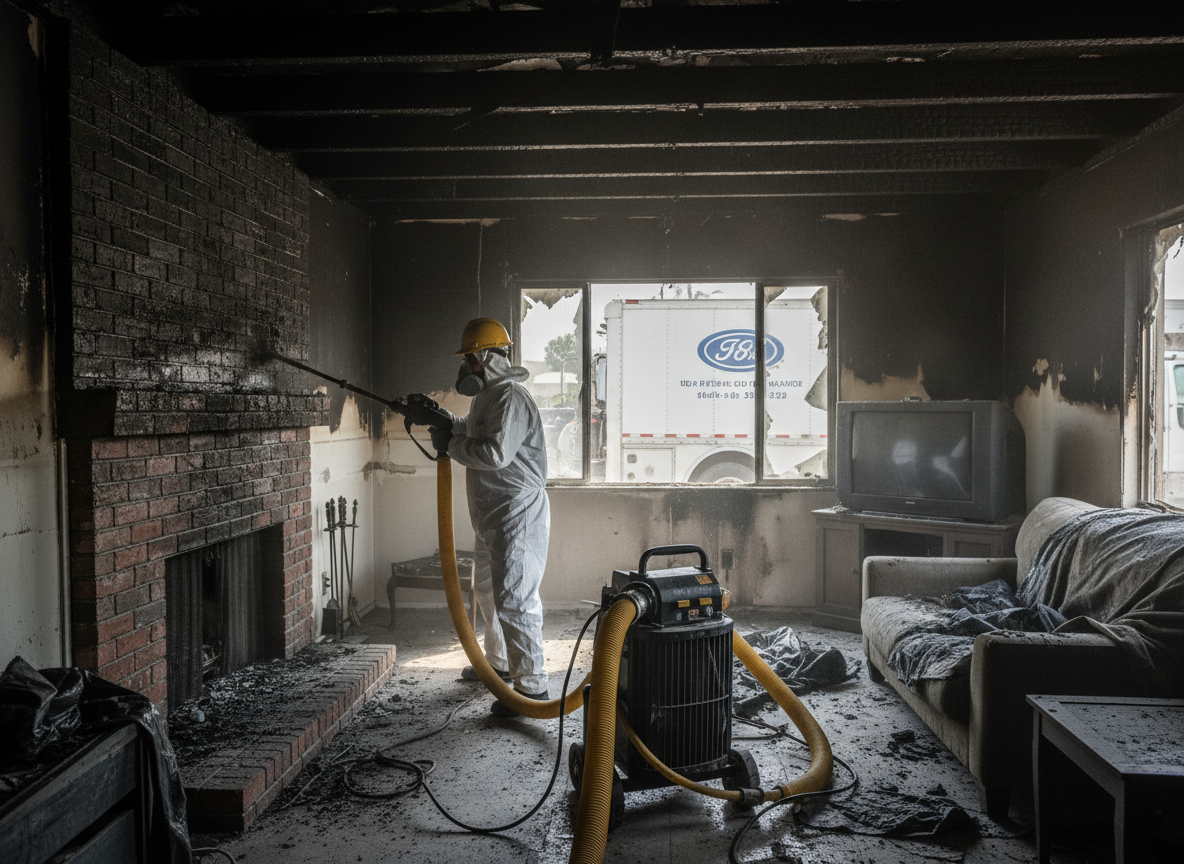
Guasti homes built before the 1970s often feature plaster-and-lath walls and older HVAC ductwork that lets smoke travel through entire structures. Restoration crews must pull baseboards and open wall cavities to reach hidden soot on framing, or odors return within weeks. Dry Inland Empire summers combined with occasional Santa Ana winds push smoke deeper into attics and underfloor spaces than in coastal counties, requiring longer dwell times for alkaline cleaners.
After any structure fire in Guasti, the first step is documenting char patterns on stucco exteriors and verifying that electrical boxes have not melted into framing. Technicians test pH levels on every porous surface because acidic smoke from synthetic furnishings etches concrete slabs and corrodes copper wiring. Skipping this step leads to recurring discoloration once humidity rises during winter.
Contents cleaning for Guasti residents focuses on ultrasonic methods for electronics and ozone treatment for textiles stored in garages. Many local properties sit near the old winery district where fires can involve aged wood and residual chemicals, so crews isolate those rooms first to prevent cross-contamination into living areas.
Seasonal Smoke Challenges in Guasti
Dry fall conditions increase the chance that smoke lingers in crawl spaces under raised foundations common on Turner Avenue properties. Crews run negative air machines longer and seal floor vents before starting wall cleaning to avoid redistributing particles into finished rooms.
Technician insight
In Guasti, the thing that catches most people out with fire and smoke damage restoration is how quickly smoke penetrates the older plaster-and-lath walls along Turner Avenue and the surrounding industrial pockets. Homeowners often think wiping surfaces is enough, but the dry air here lets acidic residue etch into concrete slabs and wiring if you skip pH testing and cavity access.
Smoke Migration Through Shared Ductwork
A kitchen fire in a 1960s Guasti duplex sent soot through the shared attic duct into the neighboring unit. We isolated both sides, opened wall cavities on the second floor, and ran alkaline washes plus negative air for four days. All surfaces passed clearance testing and both households returned without odor complaints.
How it works
- 1
Initial Assessment
Technicians arrive within hours, map smoke migration through the home, and test surfaces for pH and corrosion.
- 2
Containment and Safety
Plastic barriers and air scrubbers isolate affected zones while crews remove charred materials and secure the structure.
- 3
Deep Cleaning
Alkaline washes, HEPA vacuuming, and odor-neutralizing agents treat walls, ducts, and contents until no residue remains.
- 4
Restoration and Verification
Repairs and repainting follow, with final clearance testing to confirm odors and particulates are gone.
Pricing
Cost depends on square footage affected, smoke type, and whether HVAC or contents require separate handling; upfront quotes provided after assessment.