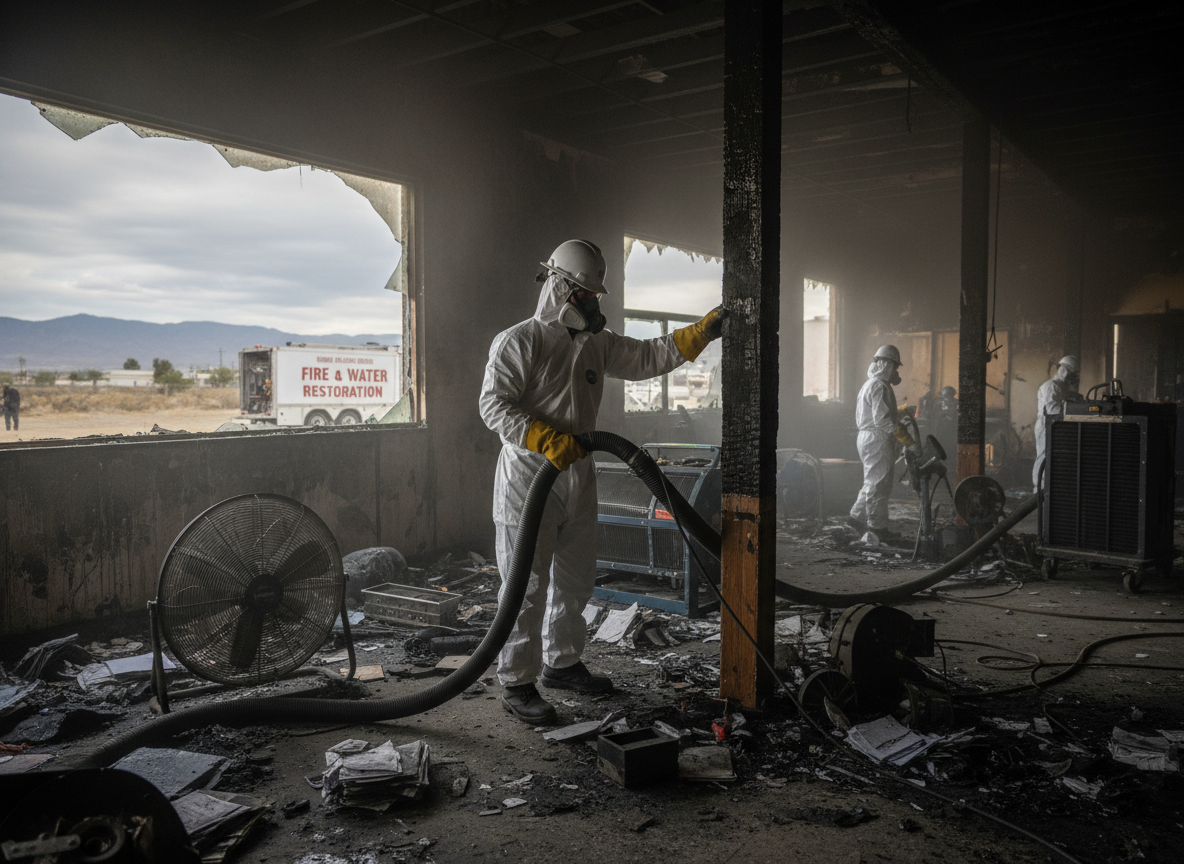
Commercial buildings in Guasti often feature older concrete tilt-up construction and metal deck roofs from the mid-century warehouse boom near the airport. After a fire, crews must first stabilize these structures because residual heat can weaken rebar and cause hidden spalling in the slabs. San Bernardino County inspectors require detailed engineering reports before any load-bearing walls are touched, which adds days to the timeline compared with newer steel-frame buildings in Rancho Cucamonga.
Soot from commercial fires travels through shared HVAC systems that serve multiple tenants, so isolation of ductwork is critical before any cleaning begins. In the dry Guasti climate, fine ash mixes with the alkaline dust common on local lots and creates a paste that bonds to painted surfaces and electrical boxes. Technicians use HEPA negative-air machines and dry-ice blasting on these surfaces to avoid driving residue deeper into porous concrete block.
Water used during suppression often pools against the high water table along the Cucamonga Creek channel, leading to secondary mold growth under slab-on-grade floors. Restoration plans must include moisture mapping with infrared cameras and removal of saturated underlayment before new finishes are installed. Failure to address this step has caused repeat callbacks in several Guasti industrial parks after the first monsoon rains.
Post-Fire Air Quality Monitoring
After visible cleanup, continuous particle and VOC monitoring runs for at least 72 hours to confirm levels meet San Bernardino County air quality standards before tenants reoccupy. This step is especially important in buildings with shared walls that can allow cross-contamination between suites.
Technician insight
In Guasti the thing that catches most people out with Commercial fire restoration is the older tilt-up warehouses along Turner Avenue that still have knob-and-tube wiring hidden behind furred-out walls. One spark during cleaning can re-ignite dust in those cavities, and the county now requires a licensed electrician on site before we can open any chase. We learned that the hard way on a job two blocks from the airport.
Office Suite Fire Near Airport
A small electrical fire in a shared warehouse office spread soot through the drop ceiling into two neighboring suites. We found heavy residue inside the common HVAC trunk and standing water against the rear slab from suppression efforts. After isolating the ducts and extracting moisture, we completed cleaning and clearance testing so the building reopened within nine days.
How it works
- 1
Site Assessment And Safety
Technicians arrive within hours, secure the property, and document all damage with photos and moisture readings before any work begins.
- 2
Containment And Debris Removal
Fire-rated barriers isolate affected zones while charred materials are removed and disposed of according to local landfill rules.
- 3
Soot And Smoke Cleaning
Specialized equipment cleans HVAC, walls, and contents using dry methods that prevent residue from setting into porous surfaces.
- 4
Structural Drying And Repairs
Moisture is extracted from slabs and walls, followed by necessary framing, electrical, and finish work to restore the space to code.
- 5
Final Clearance And Handover
Independent testing confirms air quality and structural integrity before the building is released back to the owner.
Pricing
Cost depends on building size, fire extent, and required engineering reports; upfront written quotes provided before work starts.