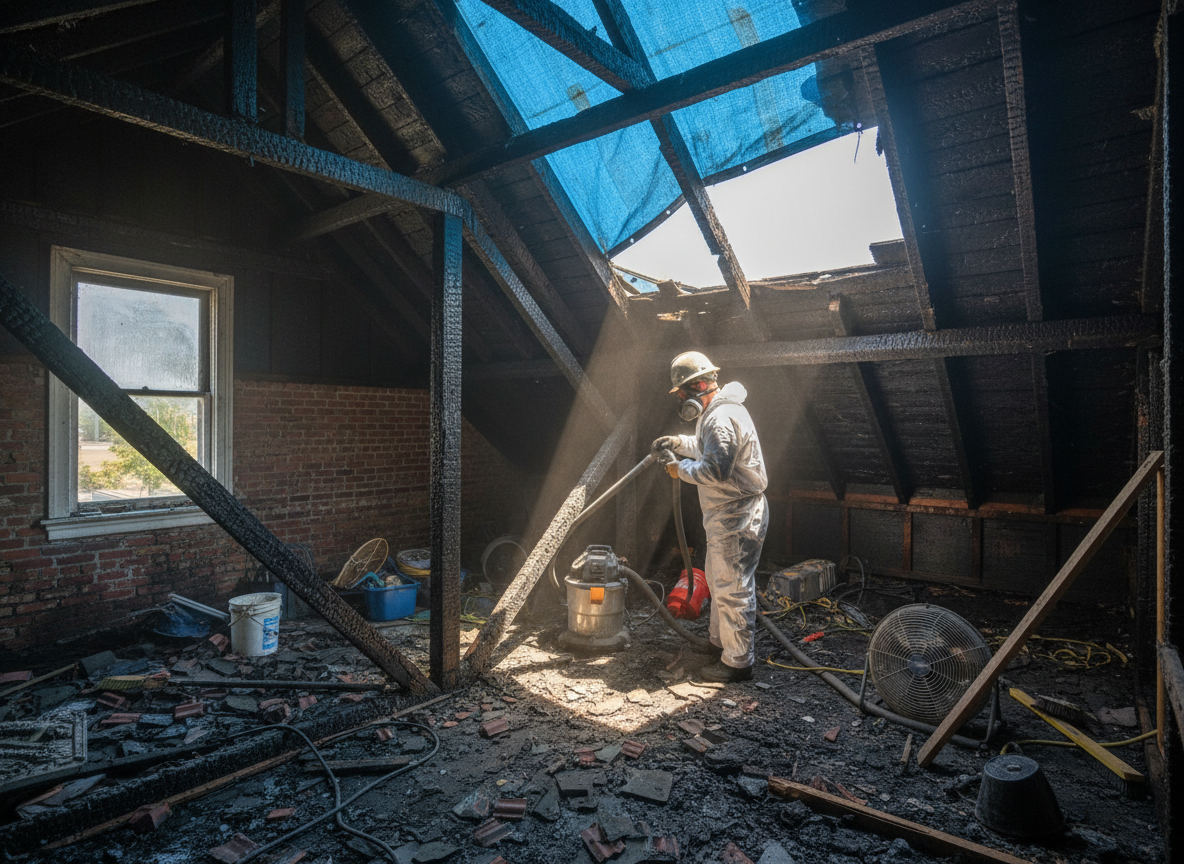
Attic fires in Guasti homes often start from electrical faults in older wiring or HVAC units and quickly involve insulation and roof sheathing. Restoration crews must first verify that all charred joists are removed down to solid wood before any new materials go in, because residual heat can reignite days later. San Bernardino County building codes require updated fire-blocking when insulation is replaced, so crews document every penetration before closing the ceiling. Dry Inland Empire air accelerates soot adhesion to fiberglass batts, making complete removal essential to prevent ongoing odor complaints.
Smoke travels through unsealed top plates and recessed lights into bedrooms below, so testing with thermal imaging and air sampling after initial cleanup is standard. Homeowners sometimes attempt DIY insulation removal only to discover hidden knob-and-tube wiring that must be replaced by licensed electricians before new cellulose or fiberglass can be installed. In Guasti’s older housing stock, original plaster ceilings crack easily during debris removal, requiring matching repair techniques rather than modern drywall patches to maintain structural integrity.
Hidden Damage Assessment
Crews open multiple inspection points along the attic floor and collar ties because fire can travel along rafters without obvious exterior signs. This step prevents callbacks when residual heat or hidden ember pockets later damage new finishes.
Containment and Air Quality
Negative-air machines with HEPA filtration run continuously during debris removal to keep soot from migrating into living areas below. Post-cleaning verification includes surface pH testing on wood members to confirm neutralization of acidic smoke residues.
Technician insight
In Guasti the thing that catches most people out with attic fire restoration is how quickly smoke migrates through the unsealed top plates of 1950s-1970s wood-frame homes into finished ceilings below, especially when Santa Ana winds push soot deeper into cavities during the initial response.
Hidden Soot in Guasti Attic
A kitchen fire traveled into the attic through a light fixture. We found extensive soot on rafters and insulation that had migrated into two bedrooms below. After removing all affected materials and neutralizing residues, new insulation was installed and air quality cleared without further odor issues.
How it works
- 1
Site Assessment and Safety
Technicians arrive within hours, secure the structure, and map all fire and smoke paths through the attic using moisture meters and thermal cameras.
- 2
Debris and Char Removal
All burned insulation, charred lumber, and soot-covered materials are removed to solid substrate while maintaining negative pressure to protect the rest of the home.
- 3
Structural and Electrical Inspection
Exposed framing and wiring are examined for hidden damage; any compromised members are marked for replacement per San Bernardino County requirements.
- 4
Cleaning and Odor Neutralization
HEPA vacuuming, soda blasting, and thermal fogging address embedded smoke on remaining surfaces before new insulation is installed.
- 5
Insulation Replacement and Final Verification
Code-compliant insulation is installed, followed by air-quality testing and clearance documentation for the homeowner.
Pricing
Pricing varies by attic size, extent of hidden char, and whether electrical or structural trades are required; written estimates provided on site before work begins.