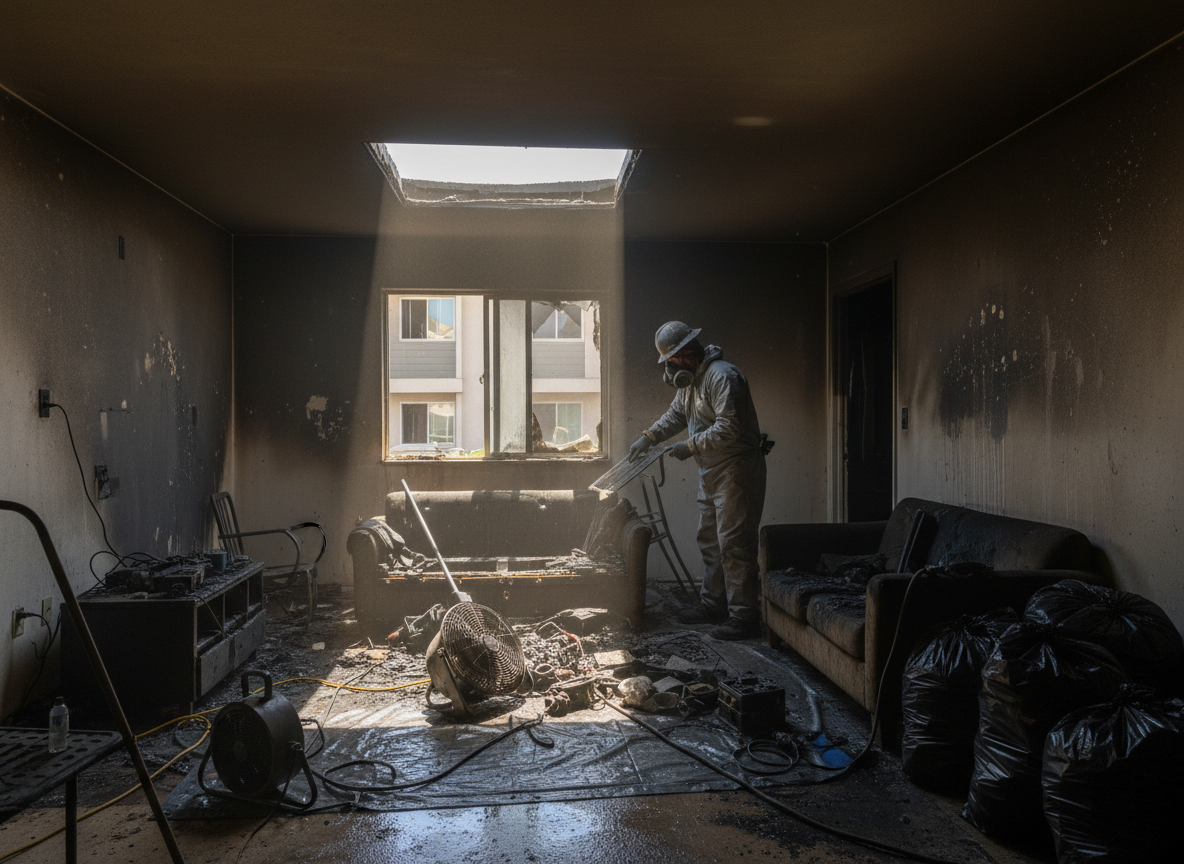
Apartment fires in Guasti often involve older multi-unit buildings where smoke travels through shared HVAC ducts and wall cavities into neighboring units. Restoration crews must map every path the smoke took before starting removal, because soot embeds in porous materials like carpet padding and acoustic ceiling tiles common in the area's 1970s and 1980s stock. Failure to trace these routes leaves odors that return weeks later when temperatures rise. Containment barriers and negative-air machines become essential to keep residue from settling in unaffected apartments on the same floor.
Drywall in Guasti apartments frequently contains multiple layers of paint that trap smoke particles, requiring surface testing before any cleaning begins. Technicians use specialized sponges and HEPA vacuums rather than water-based methods that can drive soot deeper into the substrate. Electrical outlets and switch boxes must be opened and cleaned individually, as residue on wiring creates ongoing odor and potential corrosion issues. Work in these buildings also means coordinating with property management to handle tenant belongings without cross-contaminating units.
After visible soot is removed, odor neutralization in Guasti apartments relies on pairing hydroxyl generators with thermal fogging because standard ozone units can damage shared ventilation components. Final clearance includes air sampling in both the affected unit and adjacent spaces to confirm no measurable particulates remain. This step prevents callbacks when residents return and notice lingering smells during evening temperature drops typical in the Inland Empire.
Technician insight
In Guasti, the thing that catches most people out with Apartment fire cleanup is how the 1970s-era apartment complexes along Turner Avenue have interconnected return-air ducts that push soot into units two floors away before anyone notices.
Soot in Adjacent Units After Kitchen Fire
A cooking fire in a second-floor apartment sent smoke through shared ductwork into units above and below. Inspection revealed embedded soot in ceiling tiles and wall cavities of three neighboring apartments. Crews isolated each space, cleaned ducts and surfaces, then ran hydroxyl treatment until air tests cleared. Residents returned without recurring odors.
How it works
- 1
Site Assessment
Technicians inspect the fire unit and connected spaces to document smoke travel through walls, ceilings and HVAC in Guasti apartment complexes.
- 2
Containment Setup
Plastic barriers and air scrubbers isolate the affected apartment to prevent soot migration into neighboring units.
- 3
Soot and Residue Removal
HEPA vacuuming, dry sponging and solvent cleaning address surfaces, contents and cavities without spreading particles.
- 4
Odor Treatment and Verification
Hydroxyl and fogging equipment neutralize smells followed by air testing across the affected and adjacent apartments.
Pricing
Pricing varies by affected square footage, number of connected units and materials requiring specialized cleaning; upfront written estimates are provided after assessment.