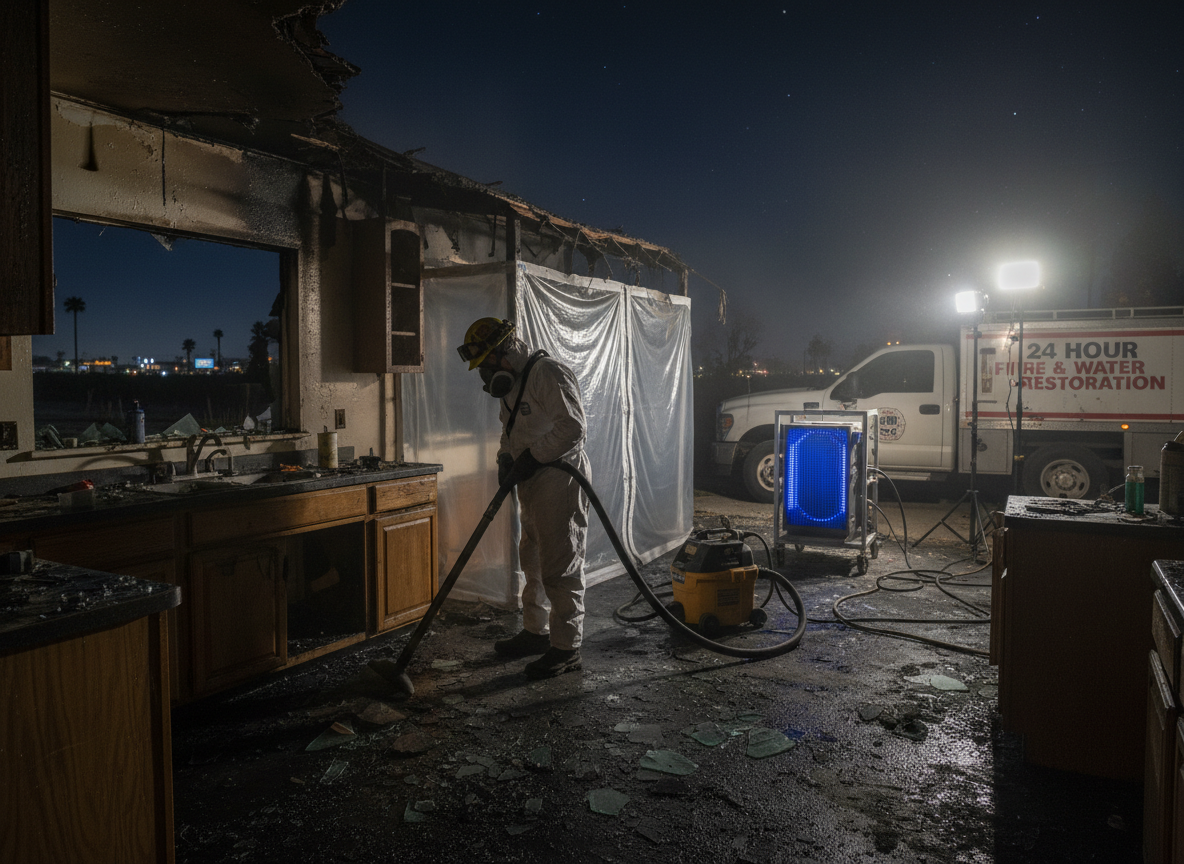
Fires in Guasti often start in older single-family homes built before 1970 along streets like Turner Avenue where knob-and-tube wiring and balloon framing allow flames to race through walls quickly. Once winter temperatures drop and indoor heating increases, electrical overloads become common. Our 24 hour crews arrive from the 323 N Turner Ave base to secure the structure first, then use thermal imaging to locate hidden char behind plaster and lath before demolition begins.
Santa Ana winds that sweep through the Guasti area carry fine soot into adjacent homes on the same block, so restoration cannot stop at the fire unit. We test HVAC systems in neighboring properties for smoke residue that settles on coils and ducts. Dry Southern California air speeds surface drying but traps moisture inside stucco walls, requiring moisture meters and targeted dehumidification to prevent hidden mold weeks later.
San Bernardino County building codes require permits for any structural repair after fire damage. We document every layer removed and coordinate inspections so homeowners avoid delays when replacing load-bearing beams or updating electrical panels to current standards. Edge cases include commercial buildings near the old winery district where concrete tilt-up construction hides rebar corrosion from fire suppression water.
Technician insight
In Guasti, the thing that catches most people out with 24 hour fire restoration is how the dry, windy conditions along Turner Avenue let smoke travel under eaves and into attic spaces of homes built in the 1950s, so we always pull insulation and check two houses on either side even when the fire stayed in one kitchen.
Kitchen Fire Spread to Attic on Turner Avenue
A late-night cooking fire in a 1960s Guasti home sent flames into the attic. We found heavy soot coating rafters two doors down because of wind-driven smoke. After securing the roof, removing charred insulation and running drying equipment for four days, the home passed county inspection and the family moved back in without further issues.
How it works
- 1
Immediate Site Security
Board up openings and post no-entry signs to prevent looting or weather intrusion within the first hours.
- 2
Detailed Assessment
Walk the property with thermal cameras and moisture meters to map all affected materials including hidden wall cavities.
- 3
Soot and Residue Removal
HEPA vacuum and clean surfaces using pH-neutral agents matched to the type of burned materials.
- 4
Drying and Monitoring
Place air movers and dehumidifiers then log daily moisture readings until levels return to pre-loss conditions.
- 5
Rebuild Coordination
Handle permit applications and schedule licensed trades for structural and finish work.
Pricing
Upfront written estimates after on-site inspection; final cost depends on square footage affected, material types and any required structural work.